

Textile protection for automotive cables and wire harnesses
Automotive cable protection contributes to the reliability of electrical and electronic systems. Vibration, friction, temperature variations and limited installation space call for a solution suited to each wire harness route. Texprotec develops textile protection for automotive cables and wire harnesses, including expandable braided sleeving, self-wrapping sleeves, reinforced mechanical protection and electromagnetic shielding solutions for hybrid and electric vehicle architectures.
Requirements vary between low-voltage wiring and high-voltage connections, depending on the operating environment, harness geometry and assembly process.
Repeated contact with brackets, adjacent components or routing points can cause cable abrasion. Vibration creates ongoing mechanical stress, while thermal cycling and potential exposure to automotive fluids influence material selection. When specifying automotive protective sleeving, engineers need to consider harness diameter, bending radius, contact points, operating temperature range and installation method. Depending on the location, the priority may be flexibility, abrasion resistance or access to the harness for maintenance.
Vehicle electrification increases the importance of electromagnetic compatibility (EMC). Where high voltage harness shielding is required, the sleeve must be assessed as part of the electrical installation: conductive coverage, shielding continuity, harness geometry and termination quality all matter. EMI sleeve performance therefore needs to be considered both through documented product measurements and through validation of the complete assembly.
Textile constructions can address different mechanical, installation and shielding requirements without relying on a single sleeve design for every automotive application.
Expandable polyester or polyamide braided sleeves accommodate different cable bundle diameters and provide mechanical protection. Self-wrapping designs can be installed around an existing harness without feeding it through a sleeve end, which is useful for assembly, maintenance or retrofit operations.
Reinforced braided constructions offer additional options for areas exposed to more demanding abrasion conditions. Selection depends on the expected mechanical loads, required flexibility and installation constraints.
For applications where EMC performance is essential, Texprotec offers hybrid braids combining tinned copper wires and textile monofilaments. EMIPROTEC® EMIP and EMIPHY provide EMI shielding together with mechanical protection; EMIPHY is specifically designed for high-voltage harnesses in hybrid and electric vehicles. The EMITWIST® EMIPHY Z self-wrapping construction supports faster installation and subsequent harness access. Shield terminations and target performance should be checked against the selected reference and the vehicle electrical architecture.
Texprotec’s portfolio addresses multiple automotive needs, from harness bundling to the protection of cables operating in demanding environments. The following products illustrate options to consider against the project specification.
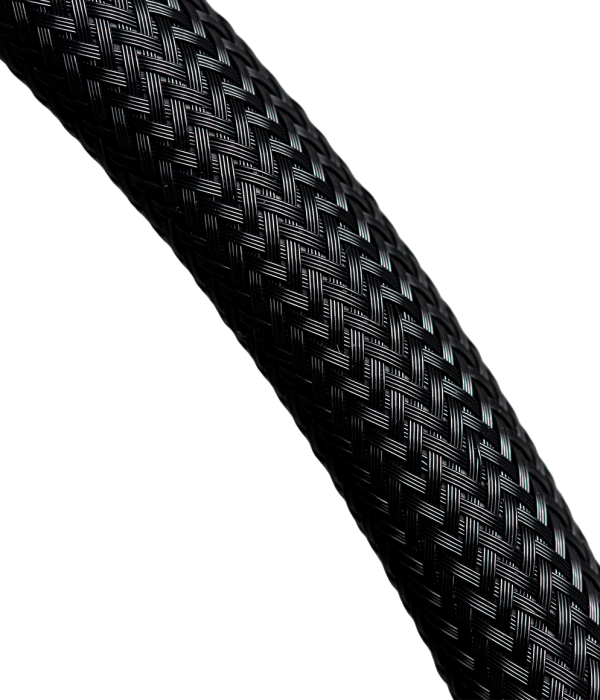
Mechanical protection
Mechanical protection
Mechanical protection
The selection process should rely on traceable technical data, including abrasion resistance, temperature and fluid behaviour, flexibility, diameter range and, where relevant, electromagnetic shielding effectiveness. Depending on the product, Texprotec datasheets refer to abrasion tests such as D44 1959 or ISO 6722, and shielding methods including IEC 61000-4-21 and IEC 62153-4-3. As one example, the EMIPHY datasheet states shielding effectiveness of 50 to 70 dB over its stated 10 kHz to 1 GHz frequency range. This figure should be assessed using the relevant part-number data and test conditions, rather than treated as a guarantee for every installation. A test method cited in a datasheet does not, by itself, establish approval against an OEM specification.
Looking for abrasion protection for an automotive wire harness, a high-voltage cable sleeve or an EMI shielding solution? Share your application, harness diameters, mechanical and thermal constraints, EMC targets and installation requirements. Texprotec’s teams can help identify relevant product references and supporting technical documentation for review.